Psychedelic-Assisted Therapy: A Clinical Reference
This section covers MDMA and psilocybin — the two psychedelic-assisted therapy programs closest to regulatory approval — with an honest accounting of the evidence, the 2024 FDA rejection of MDMA-AT, the ongoing psilocybin trials, and the clinical questions that come up when patients ask about these treatments.
Overview
As of early 2026, no psychedelic-assisted therapy is FDA-approved in the United States. The field is in a complicated position: the Phase 3 data that initially looked pivotal has run into regulatory headwinds, and the clearest near-term approval candidate (psilocybin) is still in active trials. Meanwhile, state-regulated programs (Oregon 2023, Colorado 2024) have opened a parallel non-medical access pathway that many patients will ask about.
This page is written for clinicians who need to answer those patient questions with accuracy and without either excessive hype or reflexive dismissal.
Regulatory status (2026)
MDMA-assisted therapy
MDMA
MDMA is a synthetic phenethylamine producing feelings of euphoria, empathy, and social connectedness. Often classified as an empathogen or entactogen rather than a classical psychedelic — it produces a different subjective quality (connection, openness) than psilocybin or LSD (visual and perceptual alterations). This distinction matters mechanistically.
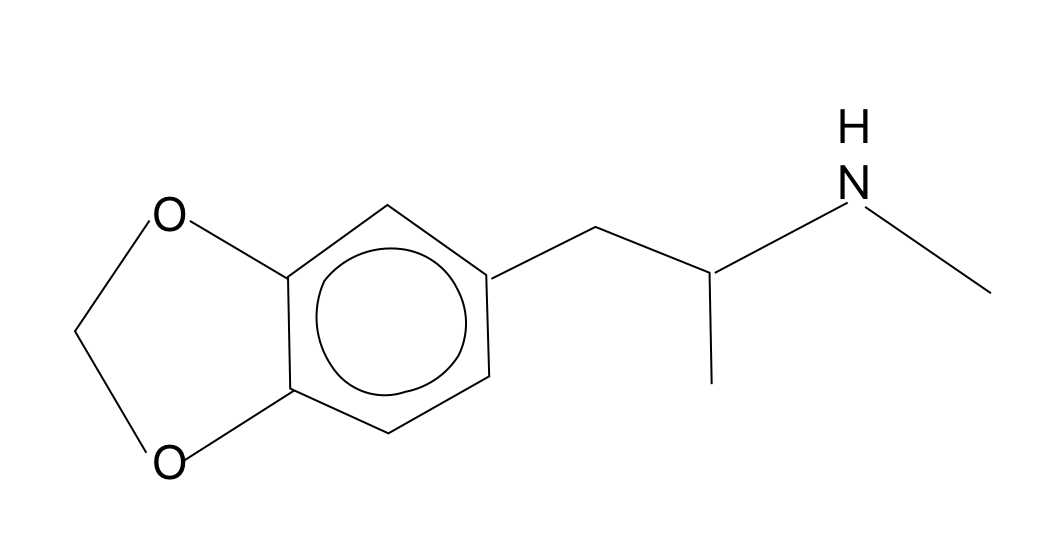
Chemical structure of MDMA. Structurally related to amphetamine with the methylenedioxy ring substitution that gives it distinct pharmacology compared to classical stimulants.
Therapeutic rationale for PTSD
Under MDMA, patients appear to be able to re-engage with traumatic memories without the typical hyperarousal response — which is sometimes described as an expanded "window of tolerance" between hypo- and hyper-arousal states. This allows trauma-focused psychotherapy to proceed with material that would otherwise be destabilizing, potentially enabling memory reconsolidation and fear extinction.
Supporting evidence:
- Young et al. 2015 — MDMA enhances fear extinction learning in animal models
- Sripada et al. 2012 — baseline connectivity abnormalities in PTSD (amygdala-insula hyperconnectivity, reduced amygdala-hippocampal positive connectivity, reduced amygdala-ACC anticorrelation) provide a mechanistic target
- Singleton et al. 2023 — MDMA-assisted therapy appears to modify amygdala-insular functional connectivity, with changes correlating with symptom improvement
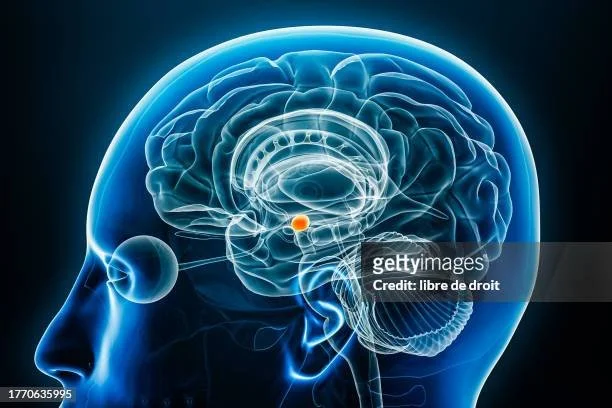
The amygdala is central to threat processing and a primary target of PTSD pathophysiology. PTSD involves amygdala hyperactivity and altered connectivity with prefrontal regulatory regions; MDMA appears to modify these patterns during therapy sessions.
MDMA pharmacology
Pharmacodynamics
- Inhibits serotonin reuptake (SERT) and triggers serotonin release via VMAT-2 interaction
- Also inhibits dopamine transporter (DAT) and norepinephrine transporter (NET), increasing synaptic cleft concentrations of both
- MAO inhibition contributes to elevated monoamine levels
- Downstream: oxytocin and arginine vasopressin release — likely contributors to the prosocial/empathogenic subjective effect
MDMA PK/PD quick reference
Acute physical effects
Acute intoxication
- Muscle tightness
- Nausea
- Decreased appetite
- Hyperhidrosis
- Feeling hot/cold
- Chest discomfort
- Dry mouth, chills, jitteriness
- Blurred vision, bruxism, nystagmus, mydriasis, tremor
Post-dose (1–2 days)
- Headache
- Nausea, decreased appetite
- Blurred vision
- Dry mouth
- Insomnia
- Brain fog
- Lethargy
Toxicity considerations
"Dosis sola facit venenum" — Paracelsus. The dose makes the poison. Most recreational fatalities involve blood levels 10–40x the typical therapeutic range, often with co-intoxicants or unintended dose escalation.
At higher blood levels, possible complications include:
- Hepatotoxicity
- Cardiac arrhythmia, MI
- Intracranial aneurysm rupture, stroke
- Hyperthermia with secondary rhabdomyolysis, myoglobinuria, DIC, acute liver injury
- Dehydration or dilutional hyponatremia (paradox: water intoxication from intentional rehydration)
- Seizures
- Serotonin syndrome (especially with serotonergic medications)
Mustafa et al. 2020 review of MDMA neurotoxicity suggests multiple mechanisms (direct neuronal effects and indirect disruption of neurotransmitter regulation). Clinical relevance at therapeutic doses is unclear.
MDMA: evidence & FDA rejection
Phase 3 trials (MAPP1, MAPP2)
| Study | N | Design | Primary outcome |
|---|---|---|---|
| Mitchell 2021 (MAPP1) | 90 | Multisite RCT, 3 MDMA or placebo sessions + psychotherapy | CAPS-5 reduction: −24.4 MDMA vs. −13.9 placebo; d = 0.91 (0.44–1.37), p<0.0001 |
| Mitchell 2023 (MAPP2) | 94 | Multisite confirmatory RCT | CAPS-5 reduction: −23.7 MDMA vs. −14.8 placebo; d = 0.7, p<0.001 |
At 18 weeks: 67–71% of MDMA group no longer met DSM-5 PTSD criteria (vs. 32–48% placebo); 46% met remission criteria (vs. 21% placebo).
The August 2024 FDA Complete Response Letter
Despite positive Phase 3 primary outcomes, the FDA declined approval. The CRL was publicly released in September 2025 as part of a broader FDA transparency initiative. Key concerns:
- Functional unblinding: the subjective effect of MDMA is distinctive enough that participants generally know which arm they're in, undermining blinded placebo comparison
- Safety documentation gaps: particularly around systematic documentation of abuse-related adverse events
- Questions about durability of the antidepressant/anti-PTSD effect over longer follow-up
- Therapist oversight and protocol consistency concerns following the ethics violation disclosure
- Limited patient diversity in trial populations
- Unclear separation of drug effect from psychotherapy effect
Clinical synthesis
The FDA decision is defensible on regulatory grounds — functional unblinding is a real problem in trials of subjectively distinctive psychoactive compounds, and the ethics violations at one site undermined confidence in trial conduct more broadly. Whether MDMA-assisted therapy "works" for PTSD is a different question than whether the current evidence meets FDA approval standards. Many clinicians consider the former plausible while agreeing the latter hasn't been met.
Practical implication for clinicians: MDMA-assisted therapy is not a treatment you can offer or refer a patient to in the US outside of clinical trials. The path forward involves at least one additional Phase 3 trial; approval timeline is unclear and likely years away.
Psilocybin-assisted therapy
Psilocybin
A naturally-occurring tryptamine alkaloid found in >200 mushroom species. A prodrug rapidly dephosphorylated to psilocin (the active metabolite), which acts as a partial agonist at multiple serotonin receptors — most notably 5-HT2A, which mediates the subjective psychedelic effect.
Therapeutic rationale for depression
Unlike daily monoamine antidepressants, the psilocybin-assisted therapy model proposes that a small number of high-dose sessions with structured psychotherapy can produce durable clinical improvement. Proposed mechanisms:
- 5-HT2A receptor agonism → altered cortical network dynamics, including default mode network (DMN) disintegration and increased global connectivity during the acute experience
- Neuroplasticity effects: preclinical data suggests psilocybin increases dendritic spine density, BDNF signaling, and structural plasticity
- "Pivotal mental states": the subjective experience itself — particularly features like mystical-type experience, ego dissolution, psychological insight — correlates with clinical outcome in multiple trials, suggesting the experience may be psychotherapeutically active rather than merely accompanying the biological effect
Clinical pharmacology
Psilocybin PK/PD quick reference
Psilocybin evidence
The psilocybin evidence base for depression is smaller than MDMA for PTSD but showing more consistent signals and less trial conduct controversy. Compass Pathways is the leading commercial sponsor; Usona Institute is running a parallel non-profit program.
| Study | N | Population | Key finding |
|---|---|---|---|
| Davis 2021 (JAMA Psych) | 24 | MDD | Immediate vs. delayed treatment; Cohen's d = 2.5–2.6 at weeks 5 and 8; 71% response, 58% remission at 1 week post-treatment |
| Carhart-Harris 2021 (NEJM) | 59 | Moderate-severe depression | Psilocybin (2x 25 mg) vs. escitalopram (6 wks) + psychological support; QIDS-SR difference not significant on primary, but response (70% vs 48%) and remission (57% vs 28%) favored psilocybin |
| Goodwin 2022 (NEJM) | 233 | TRD | Single dose 25 mg vs. 10 mg vs. 1 mg (control); MADRS at 3 weeks: −12.0 / −7.9 / −5.4. Response 37% / 19% / 18%. Effect sustained at 12 weeks in ~20%. |
| Raison 2023 (JAMA) | 104 | MDD | Single 25 mg psilocybin vs. niacin control; MADRS difference −12.3 at day 43, −12.0 at day 8. Significant SDS functional improvement. |
Context on effect sizes
Limitations of the evidence base
- Functional unblinding concern applies here as well — though Compass Pathways has partially addressed this by using low-dose (1 mg) psilocybin rather than inert placebo as control
- Sample sizes smaller than Phase 3 standards for MDD
- Expectancy effects in highly-motivated trial participants may inflate effect sizes
- Durability data is limited; relapse rates after single dose appear meaningful
- Cardiac safety data at scale is pending
Mechanism comparison: psychedelics vs. ketamine
Classical psychedelics (psilocybin, LSD, DMT, mescaline) and MDMA are often grouped under "psychedelic-assisted therapy," but the mechanisms are quite different — and both are distinct from ketamine.
| Compound | Primary target | Subjective quality | Clinical indication |
|---|---|---|---|
| Classical psychedelics (psilocybin, LSD) | 5-HT2A agonist | Perceptual/visual, ego dissolution, mystical-type experiences | Depression, TRD |
| MDMA | Monoamine releaser (5-HT, NE, DA); oxytocin release | Empathogenic, prosocial, emotionally open | PTSD |
| Ketamine | NMDA antagonist (plus opioid, AMPA) | Dissociative, cognitive alteration, often out-of-body | Depression, suicidality |
The practical implication: these aren't interchangeable treatments. Mechanism-based matching of compound to indication is part of the field's current theoretical basis, though evidence-based matching is still evolving.
Clinical considerations
Common patient situations
- Patient asking about psychedelic retreats abroad — worth discussing the quality-control variability, absence of US medical accountability, risks for anyone with cardiovascular or psychiatric history involving psychosis, difficulty integrating experiences without ongoing US-based support
- Patient considering Oregon/Colorado state programs — these are real legal pathways but not medical treatment; facilitators aren't medical professionals; screening is variable; worth knowing if your patient is going this route for coordination and safety planning
- Patient with TRD asking whether to wait for psilocybin approval — ketamine is available now with comparable evidence in TRD; suggesting "wait 1–3 years" isn't usually the right answer for someone actively suffering
- Patient with severe PTSD after 2024 FDA decision — first-line evidence-based trauma therapies (PE, CPT, EMDR) retain their place; TMS for PTSD is FDA-cleared; ketamine has evidence in PTSD as well
Cautions regardless of access path
- Psychosis risk: classical psychedelics are contraindicated in patients with personal or family history of schizophrenia or bipolar I; can precipitate first episodes
- Cardiovascular: 5-HT2B agonism carries valvulopathy risk with chronic use; acute BP/HR elevation requires cardiovascular screening
- Serotonin syndrome: interactions with MAOIs and potentially with SSRIs/SNRIs (though SSRI interactions with psilocybin may actually reduce psilocybin effects, creating different concerns)
- Psychological preparation: the therapeutic model depends on preparation and integration; access pathways that skip these are higher-risk
- Destabilization: significant proportion of patients report challenging or destabilizing experiences that may require clinical support afterward
Referring & advising patients
Patient asks: "Can you refer me to a psychedelic therapy program?"
The honest answer in early 2026: in the US medical system, no — unless you're enrolling them in a clinical trial. Most academic psychiatric centers have active trials; ClinicalTrials.gov is searchable by condition and location. Major US programs include Johns Hopkins Center for Psychedelic and Consciousness Research, NYU Center for Psychedelic Medicine, UCSF Translational Psychedelic Research Program, Mount Sinai, and various Compass and Usona trial sites.
Patient asks: "Should I do this underground or abroad?"
A reasonable approach is honest, non-judgmental risk discussion rather than reflexive advocacy or opposition:
- Medical screening abroad is often inadequate for cardiovascular contraindications
- Drug quality/dose control varies enormously
- If something goes wrong psychologically, the patient is far from their support system and usual providers
- Retreat facilitators often aren't clinicians and may not recognize when a participant needs medical or psychiatric intervention
- Integration support after returning home is usually absent
- For many patients, available US treatments (ketamine, ECT, TMS, intensive psychotherapy) are underutilized before pursuing these alternative pathways
Alternative framings that often help
- For TRD: "There's a treatment with similar mechanism and speed that's available now — ketamine or esketamine. If we address this with current tools and it doesn't work, psilocybin will likely be available in 1–3 years."
- For PTSD: "MDMA-assisted therapy is probably 3–5 years away in the best case. In the meantime, there are evidence-based trauma therapies that work for most patients, and some emerging neuromodulation options we can consider."
- For meaning/existential issues: it's worth acknowledging that some patient interest in psychedelics isn't really about symptom treatment — it's about meaning-making, end-of-life concerns, or spiritual questions that aren't well-served by any current psychiatric treatment. That's a real clinical conversation even when the answer is "I can't offer that legally right now."
Prisma Health Neuromodulation Program
For consultation on treatment options for TRD, PTSD, or severe depression where psychedelic therapy is being considered. We can help patients think through their current options and the research landscape.
Behavioral Health and Wellness Pavilion
725 Grove Road, Greenville, SC 29605
Adam Hart, MD — Medical Director, Neuromodulation Program
Certified in Psychedelic-Assisted Therapy
References
Key primary sources. Note that three earlier MDMA-AT papers in Psychopharmacology were retracted in August 2024; retracted papers are not listed here.
MDMA: Phase 3 trials
- Mitchell JM, Bogenschutz M, Lilienstein A, et al. MDMA-assisted therapy for severe PTSD: a randomized, double-blind, placebo-controlled phase 3 study. Nat Med 2021;27(6):1025–1033. doi:10.1038/s41591-021-01336-3
- Mitchell JM, Ot'alora GM, van der Kolk B, et al. MDMA-assisted therapy for moderate to severe PTSD: a randomized, placebo-controlled phase 3 trial. Nat Med 2023;29(10):2473–2480.
MDMA: mechanism and pharmacology
- Kalant H. The pharmacology and toxicology of "ecstasy" (MDMA) and related drugs. CMAJ 2001;165(7):917–928.
- Young MB, Andero R, Ressler KJ, Howell LL. 3,4-Methylenedioxymethamphetamine facilitates fear extinction learning. Transl Psychiatry 2015;5(9):e634.
- Sripada RK, King AP, Garfinkel SN, et al. Altered resting-state amygdala functional connectivity in men with posttraumatic stress disorder. J Psychiatry Neurosci 2012;37(4):241–249.
- Singleton SP, Wang JB, Mithoefer M, et al. Altered brain activity and functional connectivity after MDMA-assisted therapy for post-traumatic stress disorder. Front Psychiatry 2023;13:947622.
- Sessa B, Higbed L, Nutt D. A review of 3,4-methylenedioxymethamphetamine (MDMA)-assisted psychotherapy. Front Psychiatry 2019;10:138.
- Mustafa NS, Bakar NHA, Mohamad N, et al. MDMA and the brain: a short review on the role of neurotransmitters in neurotoxicity. Basic Clin Neurosci 2020;11(4):381–388.
- Verrico CD, Miller GM, Madras BK. MDMA (Ecstasy) and human dopamine, norepinephrine, and serotonin transporters. Psychopharmacology 2007;189(4):489–503.
MDMA: regulatory
- US Food and Drug Administration. Complete Response Letter, NDA 215455 (midomafetamine capsules), August 8, 2024. Publicly released September 4, 2025.
- Lykos Therapeutics press release: Lykos Therapeutics announces Complete Response Letter for midomafetamine capsules for PTSD, August 9, 2024.
Psilocybin: clinical trials
- Davis AK, Barrett FS, May DG, et al. Effects of psilocybin-assisted therapy on major depressive disorder: a randomized clinical trial. JAMA Psychiatry 2021;78(5):481–489.
- Carhart-Harris R, Giribaldi B, Watts R, et al. Trial of psilocybin versus escitalopram for depression. N Engl J Med 2021;384(15):1402–1411.
- Goodwin GM, Aaronson ST, Alvarez O, et al. Single-dose psilocybin for a treatment-resistant episode of major depression. N Engl J Med 2022;387(18):1637–1648.
- Raison CL, Sanacora G, Woolley J, et al. Single-dose psilocybin treatment for major depressive disorder: a randomized clinical trial. JAMA 2023;330(9):843–853.
Who responds to psychedelic-assisted therapy — and can we tell before dosing?
Psychedelic-assisted therapy has produced some of the most striking response signals in modern depression research — alongside some of the most uneven individual outcomes. Prediction is genuinely the least mature here compared with TMS, ECT, or ketamine. The honest state of the science today is that we can describe what correlates with response during and after a session much better than we can predict it before one.
Three reasons patients don't respond
Non-response in psychedelic-assisted therapy has a slightly different structure than in other neuromodulation treatments. The drug itself is only one variable — the psychotherapeutic container, the subjective experience, and the post-session integration work all carry predictive weight. Still, the same three-category framing is useful.
What actually correlates with response
The psychedelic prediction literature has two fairly distinct categories: variables measured during or after the session that correlate strongly with outcome (mystical experience, emotional breakthrough, psychological insight) and variables measured before the session that correlate more weakly but are potentially actionable clinically (mindset, preparedness, rapport, baseline neuroimaging).
Mystical-type experience
Griffiths 2016; Roseman 2018; Brudner 2025The MEQ-30 score — particularly the Oceanic Boundlessness dimension — correlates consistently with antidepressant response across multiple trials in depression, anxiety, and substance use. In a recent TRD trial (Brudner 2025), MEQ total score at dose 1 predicted 2-week MADRS reduction. Not every trial replicates the effect at every dose, and correlation does not establish causation — but this is the most robust intra-session correlate.
Emotional breakthrough (EBI)
Roseman 2019; Goodwin 2024In the COMP001 TRD trial (n=233), the Emotional Breakthrough Inventory score at the 25-mg dose correlated strongly with 3-week MADRS improvement (r = −0.64). EBI and Oceanic Boundlessness are the two intra-session variables with the strongest and most replicated correlations to depression outcome in controlled data.
Psychological flexibility & insight
Davis 2020; Zeifman 2024Post-session increases in psychological flexibility, experiential acceptance, and psychological insight mediate depression and suicidal-ideation improvement. This is the integration-phase window where the clinician has the most leverage: ACT-informed integration therapy appears to specifically enhance these mediators of response.
Mindset, preparedness, rapport
Meikle 2025; McAlpine 2024 (IPPS)Pre-session psychological readiness, comfort, clear intention, and therapist rapport predict both the quality of the experience and subsequent antidepressant response in preliminary work. The Imperial Psychedelic Predictor Scale (IPPS) explains modest but significant variance in MEQ and EBI scores. The most practically useful pre-treatment predictor class — and the one most amenable to clinical optimization.
Baseline fMRI connectivity
Stoliker 2024Baseline resting-state functional connectivity discriminates psilocybin responders from non-responders in small TRD cohorts (n=16, validated in n=22 from the Carhart-Harris escitalopram comparison trial). Effect size is meaningful, but sample sizes are small, replication across sites is pending, and the finding is not yet clinically actionable.
Trait absorption & openness
Studerus 2012; Aday 2021Trait absorption (capacity for immersive attentional experience) is among the most consistent personality predictors of mystical experience, and by extension of outcome. Baseline Openness has a weaker, less consistent association. Neither is strong enough to justify using as a selection criterion, but each may inform pre-session preparation work.
A special note on MDMA-assisted therapy for PTSD
Prediction literature for MDMA-AT is thinner than for psilocybin, largely because the pivotal trial data are more recent and the 2024 FDA decision paused commercial development. In the MAPP1 and MAPP2 trials (Mitchell 2023), responder subgroups were more clearly defined by comorbidity and baseline severity than by biological predictors: patients with comorbid dissociative-subtype PTSD, high childhood trauma burden, and depressive comorbidity tended to show larger absolute benefit, consistent with a ceiling effect in less severe patients. MDMA-specific biomarkers for response are not yet established.
What this means for practice today
For clinicians advising patients about psilocybin-assisted therapy (in research settings, Oregon/Colorado regulated frameworks, or abroad), a few practical implications emerge from the predictor literature:
- Pre-session preparation is not pro forma. Rapport with the therapist team, clear intention-setting, psychological readiness, and realistic expectations predict both the quality of the experience and the likelihood of sustained response. Patients entering a session ambivalent, coerced, or under-prepared are less likely to benefit.
- Integration work is the therapy. The dosing is the catalyst; the subsequent weeks of integration — where psychological flexibility and insight translate into behavioral change — are where durable benefit is built. Patients considering underground or retreat-based use without integration structure should be counseled candidly about this.
- Medical and psychiatric optimization first. Address cardiovascular status, taper incompatible medications where clinically safe, screen carefully for bipolar or psychotic-spectrum vulnerability, and treat active substance use before — not during — a psilocybin course.
- Be cautious about over-prediction. No biomarker or personality scale is strong enough to deny a trial. The most useful clinical question is not "will this patient respond?" but "what can we do in preparation and integration to maximize the chance that they will?"
- Expect heterogeneity. Individual-level response trajectories in psilocybin trials are far more variable than aggregate data suggest. Some patients remit for a year; some return to baseline within weeks; some show delayed response. Counseling should reflect this range, not a single average.
Patients who don't respond to psychedelic-assisted therapy aren't failing the molecule. In most cases, something — in the preparation, the session itself, the integration, or the life context — didn't come together the way the model requires. A well-conducted protocol accounts for all of those, and an honest post-session debrief identifies which piece needs more work if the initial response was limited.
- Roseman L, Nutt DJ, Carhart-Harris RL. Quality of acute psychedelic experience predicts therapeutic efficacy of psilocybin for treatment-resistant depression. Front Pharmacol. 2018;8:974. doi:10.3389/fphar.2017.00974.
- Griffiths RR, Johnson MW, Carducci MA, et al. Psilocybin produces substantial and sustained decreases in depression and anxiety in patients with life-threatening cancer: a randomized double-blind trial. J Psychopharmacol. 2016;30(12):1181–1197. doi:10.1177/0269881116675513.
- Brudner RM, Kaczmarek E, Blainey MG, et al. Examining mystical experiences as a predictor of psilocybin-assisted psychotherapy for treatment-resistant depression. J Psychopharmacol. 2025 (online first). doi:10.1177/02698811251346697.
- Goodwin GM, Croal M, Feifel D, et al. Psilocybin for treatment resistant depression in patients taking a concomitant SSRI medication. Neuropsychopharmacology. 2023;48:1492–1499.
- Meikle SE, Carter O, Liknaitzky P, et al. Psilocybin with psychotherapeutic support for treatment-resistant depression: a pilot clinical trial. Ther Adv Psychopharmacol. 2025. doi:10.1177/20451253251377187.
- Stoliker D, Liddell BJ, Razi A, et al. Predicting the outcome of psilocybin treatment for depression from baseline fMRI functional connectivity. J Affect Disord. 2024. doi:10.1016/j.jad.2024.04.037.
- Davis AK, Barrett FS, Griffiths RR. Psychological flexibility mediates the relations between acute psychedelic effects and subjective decreases in depression and anxiety. J Contextual Behav Sci. 2020;15:39–45. doi:10.1016/j.jcbs.2019.11.004.
- Mitchell JM, Ot'alora GM, van der Kolk B, et al. MDMA-assisted therapy for moderate to severe PTSD: a randomized, placebo- controlled phase 3 trial. Nat Med. 2023;29(10):2473–2480. doi:10.1038/s41591-023-02565-4.